promo
 contacts
 login
 Български
 Русский
 Română
 Ελληνικά
 Italiano
 Deutsch

 EN


Model: SFO-ORIGINAL-20M
Manufacturer: STRAIT-FLEX


 office@serafimov-systems.eu

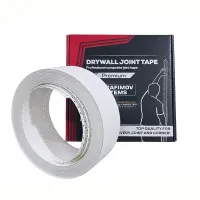
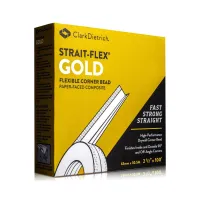
STRAIT-FLEX® ORIGINAL is a professional composite tape designed for accurately forming, straightening and reinforcing inside and outside corners in drywall and dry construction systems.
Manufactured in the USA, ORIGINAL is designed for difficult-to-finish corners where a stable, straight and crack-resistant edge is required. Its special composite structure creates a firm, smooth surface, while the slotted edge profile helps provide excellent adhesion to the drywall substrate.
The tape is suitable for inside and outside corners at different angles, including standard 90-degree joints. It can be used to finish wall-to-ceiling junctions, soffits, boxed-in sections, bay windows and other complex architectural details. When correctly installed, it helps straighten uneven corner lines and reinforce areas that are difficult to finish using conventional materials.
STRAIT-FLEX ORIGINAL is also suitable for areas exposed to moisture, where paper tapes may deteriorate. It does not rust, does not require pre-soaking in water and is resistant to cracking. Its strength makes it an alternative to standard corner beads, while requiring less material for installation.
Designed for forming and reinforcing inside and outside corners.
Suitable for different corner angles, including 90°.
Special slotted edge profile for strong adhesion to drywall.
Creates firm, smooth and straight corner lines.
Crack-resistant and, according to the manufacturer, many times stronger than standard paper tape.
Water-resistant and will not rust.
Suitable for areas with increased moisture.
No pre-soaking required.
Can replace traditional corner beads and reduce the amount of material needed for installation.
Suitable for soffits, ceilings, boxed-in sections, bay windows and complex architectural corners.
Easy to cut, transport and store in roll form.
1. Preparing the Tape and Surface
Measure the required length and cut the tape. The ends can be trimmed at approximately 43–45°.
Do not soak the tape in water before use.
Thoroughly clean the installation area, removing dust, uneven areas and material residue. On plastered walls, remove rounded edges at the corners.
Check the drywall screws: their heads must not protrude above the board surface.
2. Preparing the Joint Compound
For optimum adhesion, the manufacturer recommends a powdered gypsum compound without additives such as glass fibres, with a setting time of at least 40 minutes after mixing with water. The prepared compound should be homogeneous, dense and tacky, but not runny.
Prepare small quantities that can be used within approximately 15–20 minutes of work. Each new batch should be mixed in a clean container.
Powdered gypsum compound: Recommended for larger irregularities and thicker application layers.
Ready-mixed compound: Suitable for even, stable surfaces where very thin layers are required.
3. Installation on Inside Corners
Apply joint compound along both sides of the corner, creating strips approximately 5–10 cm wide. The recommended layer thickness is 1.5–2.5 mm, with a thicker layer possible closer to the corner itself.
Fold the tape along its centre crease with the printed sides facing each other. Then gently open it to an angle wider than the corner, allowing it to fit more closely against the walls.
Position the tape over the freshly applied compound and press it into the inside corner.
Use a taping knife to adjust the tape and create a straight corner line. Work carefully to avoid cutting the tape with the edge of the tool.
Push excess compound and air bubbles outwards so that the compound fills any gaps beneath the tape.
For standard 90° corners, a specialist inside-corner roller tool can make installation easier.
Usually, 3–4 knife passes are sufficient to distribute the compound, remove excess material and level the surface.
Allow to dry. If necessary, apply another coat without filling the actual inside corner with excess compound, helping preserve a straight corner line.
4. Installation on Outside Corners
Apply joint compound along both sides of the outside corner, creating strips approximately 5–10 cm wide. The recommended layer thickness is 1.5–2.5 mm.
Fold the tape along its centre crease with the printed sides facing each other. For an outside corner, open it to a smaller angle than the corner itself so that it fits tightly against the surfaces.
Place the tape onto the fresh compound and press it into the outside corner.
Align it with a taping knife to create a straight, stable edge. Excess compound and air bubbles should be pushed outwards.
For 90° corners, a specialist outside-corner roller tool can help with installation.
Allow to dry. If required, apply an additional coat of compound and leave it to dry again.
5. Finishing
Do not sand between coats. The manufacturer recommends removing uneven areas with a taping knife to avoid unnecessary priming between layers.
Once all coats have been applied and fully dried, carefully sand with abrasive paper of at least P180 grit.
The inside fold line can be finished using the edge of a sharply folded piece of sandpaper.
For final surface preparation, diluted emulsion paint can be used. The manufacturer does not recommend deep-penetrating primers.
Additional Recommendation: When an inside corner meets a flat drywall surface, correct overlapping and joining of the tapes helps prevent the corner line from becoming distorted.
Brand: STRAIT-FLEX
Model: ORIGINAL
Type: Composite corner tape
Country of Origin: USA
Length: 20 m
Width: 61 mm
Thickness: 0.6 mm
Application: Inside and outside corners
Suitable for: Drywall, walls, ceilings, soffits, boxed-in sections and bay windows
Installation: With a suitable gypsum or joint compound
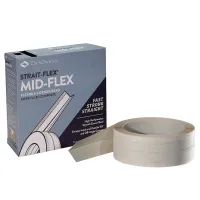
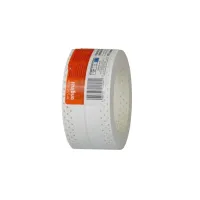
Note: Packaging may vary depending on the current production batch. The tape may be supplied in an individual cardboard box or wound on a roll.
Copyright and Intellectual Property: All texts, meta descriptions, technical instructions and product articles on this website are original copyrighted content owned by Serafimov Systems Ltd. Product images are used with the manufacturer's official permission and granted rights. Any unauthorised copying, adaptation, duplication or distribution without prior written permission is prohibited and may result in legal action under the Bulgarian Copyright and Related Rights Act.
No comments yet. Share your opinion!